Skip to content
Toggle main navigation
Association For Business Psychology logo
  • Hub
  • Events
  • Perspectives on Business Psychology
    • Industry Insights
  • Biz Psych Cup
    • 2025-2026 Biz Psych Cup
    • 2024-2025 Biz Psych Cup
  • Professional Development
    • ABPConneXt
    • ABP Affiliate - The Psychometric Forum
    • ABP Affiliate - The HR Curator
    • Opportunities
  • Awards
    • How to Enter
    • Categories
    • FAQs
    • ABP Award Winners
  • Membership Pricing
  • Who are the ABP
    Log in
    JOIN NOW

    Perspectives on Business Psychology

    Filter by category
    All
    ABP
    ABP Book Club
    AI
    Assessment
    Careers in BP
    Certification
    Change
    Coaching
    Consulting Cycle
    Culture
    See all

    Highlighted news

    Search results (37)

    More Than Words: Using Strengths-Based Approaches to Build Psychological Safety

    More Than Words: Using Strengths-Based Approaches to Build Psychological Safety

    By Michele Deeks. Recent evidence suggests that creating and maintaining workplaces where everyone feels psychologically safe is something we’re making limited progress on. The most recent data from Mental Health First Aid England suggests that only 55% of UK employees feel able to raise mistakes or risks at work. It’s easy to point to changes within the world of work over the last couple of decad
    17 November 2026
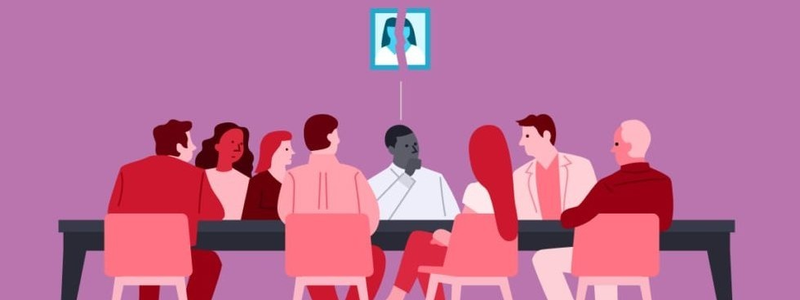
    A Safe Workplace Must Be Safe for Difficult Conversations

    A Safe Workplace Must Be Safe for Difficult Conversations

    By Miguelle James. Abstract:Psychological safety is often confused with the absence of discomfort. Drawing on Business Psychology research, this article examines how silence, power dynamics and the avoidance of difficult conversations undermine workplace trust and accountability. It argues that genuine workplace safety is not defined by the absence of challenge, but by how organisations enable and
    9 November 2026
    Stress Prevention Starts with the System – A Business Psychology Perspective on Mental Health at Work

    Stress Prevention Starts with the System – A Business Psychology Perspective on Mental Health at Work

    By Dr Liz Wall. From Taking a Break to Preventing the Need for Recovery In my last article for the Association for Business Psychology in August, I wrote about the benefits of taking a break. So, I decided to take my own advice. That pause reminded me how important recovery is. But it also prompted a broader question: what if we could prevent some of the workplace stress that makes recovery so nec
    28 October 2026
    Calling Collapse™: What Organisations Can Do When Masking Meets a Deeper Sense of Purpose

    Calling Collapse™: What Organisations Can Do When Masking Meets a Deeper Sense of Purpose

    By Dr Jen Spencer. This is the second in a two-part series on neurodivergent professionals and the hidden cost of appearing fine at work. The first article in this series argued that psychological safety is not only something a team creates. For neurodivergent professionals, years of learning which traits are met with acceptance can produce a self-imposed unsafety that persists even in genuinely s
    26 October 2026
    Personality, Depression and Anxiety in Leadership: On the Limits of Psychological Inference

    Personality, Depression and Anxiety in Leadership: On the Limits of Psychological Inference

    By Chrysovalantis 'Chrys' Gerokonstantis. Understanding individual differences without reducing people to labels. Two leaders may face the same demanding situation yet respond very differently. One becomes more cautious, another more controlling, while a third appears relatively unaffected. Personality can help us understand some of these differences, but it is only part of the picture. Depression
    19 October 2026
    When High Performance Hides Strain: Recognizing Mental Health Pressure at Work

    When High Performance Hides Strain: Recognizing Mental Health Pressure at Work

    By Ursula Clidière and Anne Calleja. A Short Vignette Maya, a senior project lead, is still delivering every milestone after a demanding promotion. Her sponsor sees a capable professional who needs to delegate more. Yet Maya is sleeping poorly, preparing late into the night, checking messages repeatedly, and replaying conversations for hours. She interprets minor revisions as evidence that she is
    14 October 2026
    The Psychology of the Thriving Workplace: Mental Health, Awareness, and Stress Prevention

    The Psychology of the Thriving Workplace: Mental Health, Awareness, and Stress Prevention

    By Shameen Mehta. Modern organisations are increasingly realising that mental health is not merely a personal issue to be managed outside of office hours. Business Psychology provides the empirical framework to understand how workplace structures directly impact psychological wellbeing. By fostering awareness and actively preventing stress, companies can transform environments that drain employees
    6 October 2026
    How Masking Shapes the Calling of the Neurodivergent Workforce

    How Masking Shapes the Calling of the Neurodivergent Workforce

    By Dr Jen Spencer. This is the first in a two-part series on neurodivergent professionals and the hidden cost of appearing fine at work, every day, in workplaces that consider them dependable. Masking, sometimes called camouflaging, is the conscious or unconscious suppression of natural neurodivergent traits to meet neurotypical workplace norms. It is a learned strategy, not a fixed trait, shaped
    5 October 2026
    Questioning What’s ‘Reasonable’: Work Design and Disability

    Questioning What’s ‘Reasonable’: Work Design and Disability

    By Ky Teasdale. The Equality Act 2010 requires 'reasonable' adjustments for workers with disabilities. The phrasing asks what the employer can reasonably do, not what the employee reasonably needs to function. As a legal test, this is sensible. As a moral one, it makes companies reactive, anticipating workforce needs only to conform to a legal framework. The consequences are visible in employment
    7 September 2026
    The Strategic Pause: The Business Psychology of Taking a Break

    The Strategic Pause: The Business Psychology of Taking a Break

    By Shameen Mehta. In the modern professional landscape, there is a pervasive myth that continuous, uninterrupted effort is the ultimate driver of success. We often treat downtime as a luxury or, worse, a sign of low commitment.However, organisational psychology tells a distinctly different story: continuous output without structured recovery leads directly to diminishing returns.Stepping away from
    19 August 2026
    How Personality Shapes Vulnerability

    How Personality Shapes Vulnerability

    By Dr Jennifer Spencer. Across healthcare, education, and social care, a growing body of research points to a phenomenon distinct from, but often mistaken for, burnout: moral injury. Where burnout is typically understood as exhaustion resulting from chronic workplace stress, moral injury describes the deeper psychological wound that occurs when professionals are repeatedly unable to act in accorda
    10 August 2026
    Decision Fatigue Debt: What It Is, How to Spot It, and What Leaders Can Do

    Decision Fatigue Debt: What It Is, How to Spot It, and What Leaders Can Do

    From The ABP Industry Insights Team. Most managers recognise physical tiredness. Fewer recognise decision tiredness, especially when it builds quietly over time. Decision fatigue debt is a useful way of describing what happens when people make a high volume of decisions, day after day, without enough genuine recovery. The result is not just momentary tiredness, but a gradual reduction in the quali
    5 August 2026
    HR Curator: 6 Ways HR Professionals Can Promote Employee Wellness

    HR Curator: 6 Ways HR Professionals Can Promote Employee Wellness

    This article was originally published on HRCurator.com on November 9, 2022 and has been republished here with permission following its transfer to our affiliate network.There is a mental health crisis in the U.S.A. According to the CDC, 1 in 5 U.S. adults aged 18 or older experience mental illness, and 71% of adults experience at least one symptom of stress, such as feeling overwhelmed or anxious.
    22 June 2026
    HR Curator: An Employees Guide to Managing your Notifications and Communications to Maximise Workplace Wellbeing

    HR Curator: An Employees Guide to Managing your Notifications and Communications to Maximise Workplace Wellbeing

    This was originally published on HRCurator.com on August 8, 2022 and has been republished here with permission following its transfer to our affiliate network. Many thanks to Answer.co.uk for sharing this very useful resource relating to what you can do as an individual to maximise your wellbeing by responsibly managing notifications and communications – all while keeping on top of your workload. 
    22 June 2026
    HR Curator: Entrepreneur Self-Care Tips: How to Identify and Beat Burnout

    HR Curator: Entrepreneur Self-Care Tips: How to Identify and Beat Burnout

    This article was originally published on HRCurator.com on May 24, 2022 and has been republished here with permission following its transfer to our affiliate network.By Eva Rose and Amber Ramsay, LearnItForLifeWhen you’re building a business from the bottom up, you’re wearing many hats, working long hours, and surviving on energy drinks or coffee. It’s a recipe for stress, anxiety, and exhaustion.
    22 June 2026
    Projected Helplessness: A Practitioner Framework for Understanding and Responding

    Projected Helplessness: A Practitioner Framework for Understanding and Responding

    By Caralyn Bains AFBPsS. Many of the ‘helpless’ behaviours we encounter in daily life do not arise from incapacity. Instead, they arise from something quieter, more relational, and far less understood.  This is the space in which Projected Helplessness lives. Across workplaces, families, partnerships, and friendships, people sometimes present as unable even when capability is preserved. They hand
    13 April 2026
    Decision Fatigue Debt: When Too Many Decisions Take Longer to Recover From

    Decision Fatigue Debt: When Too Many Decisions Take Longer to Recover From

    From The ABP Industry Insights Team. Understanding references to decision fatigue debt, and the related evidence base, helps Business Psychologists design cognitively sustainable roles and systems, and support performance and wellbeing beyond short-term resilience or workload models.  Modern organisations ask people to make decisions constantly. Some are small and routine, others complex, ambiguou
    8 March 2026
    Connection in Modern Job Seeking

    Connection in Modern Job Seeking

    The modern job hunt can feel exhausting, considering the saturation of most markets and the increased number of people reaching the job-seeking age. CVs are polished and cover letters are perfected, but often these attempts are met with silence. It’s an isolating experience that can chip away at anyone’s confidence, as they slowly lose the motivation to continue finding the right job. But, there i
    16 February 2026
    Projected Helplessness: The Psychology Beneath the Behaviour

    Projected Helplessness: The Psychology Beneath the Behaviour

    By Caralyn Bains AFBPsS. Projected Helplessness, as expanded upon in the first article in this series, is the act of presenting oneself as unable to perform a task, despite preserved capacity, in order to elicit care, reassurance, closeness, or relief from responsibility. This behaviour is often easy to recognise but harder to understand. It may look simple on the surface, but the psychological ar
    9 February 2026
    Beyond the Headlines: Five Evidence-Based Priorities for Employers Supporting Gen Z at Work

    Beyond the Headlines: Five Evidence-Based Priorities for Employers Supporting Gen Z at Work

    By Clodagh O'Reilly.Stories about Gen Z rejecting “hustle culture” or employers struggling to recruit younger workers are now common across media feeds. These narratives often contain a kernel of truth, yet the conclusions drawn from them can be simplistic or even misleading. A single anecdote may capture attention, but it rarely captures the complexity of today’s workforce. For organisations, and
    14 January 2026
    Contact
    The Association for Business Psychology
    81 King St, Manchester, M2 4AH, United Kingdom

    United Kingdom (Country)

    communityhub@theabp.org.uk
    +44 (0)161 883 7972
    Links
    • Terms of Use
    • Privacy Policy
    • Cookie Policy
    Cookies
    Withdraw cookie consent
    Community engagement platform by Hivebrite.