

A Magic Divining Rod: When Psychometrics Validate Gut Instinct
By John Amaechi OBE.
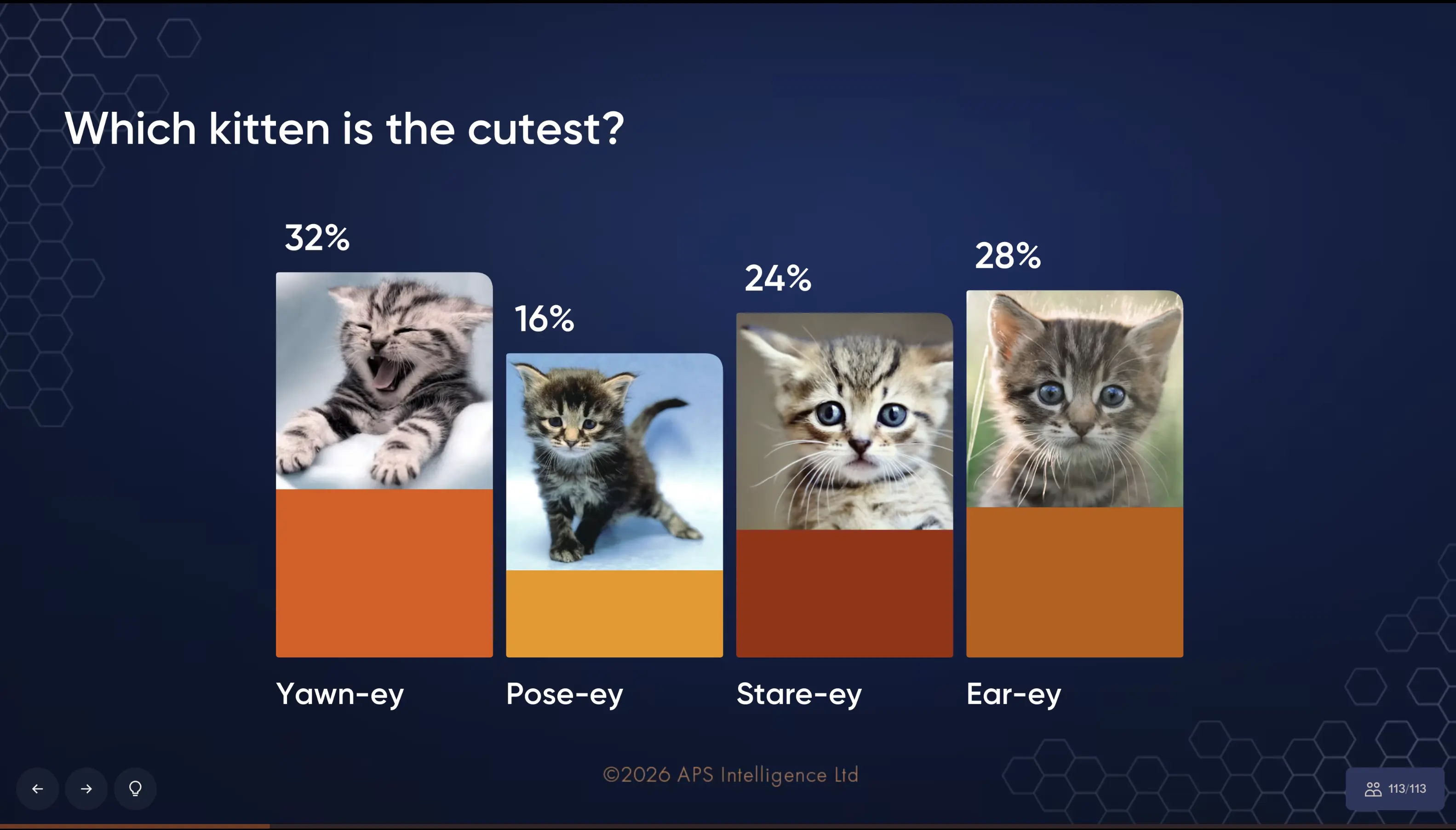
Who knew kittens could spark such controversy?
The feedback from my session at this year’s ABP Conference is in, and I thank you for it. You described my session as “provocative but compelling”, and some of you thanked me for my frankness. The comment I liked most was about how I position psychometric testing within the bigger picture. Many of you described challenging and robust conversations as the ones we, as practitioners, must have, and I embrace that.
I will admit I was a little taken aback by the challenge to my kittens’ research. The kittens intentionally inspire reflection and make a great lead-in to a broader conversation about our perceptions of others and how we categorise people, not just cats. But we spent a little more time – and I experienced a little more ‘heat’ – discussing the research methodology than I had imagined we would.
Use and Abuse of Psychometrics
I am on the BPS Register of Qualifications in Test Use. I am a qualified user of a number of trait and type instruments, and, as I explained in the room, I barely use them. This isn’t a broad-based bashing of those of you who use psychometrics; it’s a pragmatic challenge to how they’re being used right under our noses.
I have spent the last decade working with organisations across the world, including the ‘SHREK’ recruitment firms that dominate executive, senior, and board recruitment across the West. Whatever methodologies and safeguards supposedly exist around the most common psychometrics, especially those used for assessment or “insight enrichment”, when they are deployed in organisations, non-prototypical people suffer.
Many of us default to protected-category assignments when speaking about differential experiences with testing, but basic prototypicality still matters a great deal in today’s supposedly sophisticated workplaces. Looking, sounding, thinking, and emoting (or not) as you are supposed to in any given sector and role still carries significant weight in selection and promotion. Don’t believe me? Take a walk by the Lloyd’s of London building, and look at the pubs nearby...who knew gilets-under-jackets were a uniform!
You are not a single, definable, immutable type or trait (and yes, many employers still think traits are fixed). Not today, not this week and not forever. This is not to preclude different preferences, capabilities or temperaments, but the human condition is too rich, too complex, and too dynamic to be captured by a primary colour, a simple binary, or a string of initials, no matter how “operationalised” the categories become.
Recognising the Limits
I often refer to myself as ‘introverted’, a kind of shorthand for why I sweat onstage even under air conditioning, and why I love to holiday alone and can sit in the sea, chest deep, no earbuds and no conversation, for hours on end.
One of the many challenges of categorisation is that while many of you understand the nuance, gaps, and abject fallacies of type and trait – and work with that knowledge to enable better practice and ameliorate harm – the executives, board members, and hiring managers appear to have missed your memo.
My summer holiday snapshot, when bluntly “Hogan-ised” through a sociability lens, can read as a quiet, socially reactive, probably ineffective public presenter. For too many, that candidate is a fail for more senior roles. I had this exact experience with an almost-overlooked, now FTSE 100 executive-coaching client, whose Hogan scores made him – and I quote the recruiter – “...a risk when it comes to delivering effectively at the AGM.”
For those of you screaming at me – I know that you know that’s a terrible interpretation – but in a world where the personal perceptions and anecdotal experiences of senior people carry disproportionate weight, an introvert equals “not senior management material” to a lot of senior decision-makers.
When Psychometrics Become Justification
Psychometrics has moved, for a significant proportion of senior leaders, from an additional, nuanced and non-generalisable mechanism for measuring the best talent to a magic divining rod held by subjective leaders to determine who fits and who doesn’t. The more the language of these “tests” speaks to their being “standardised”, “valid”, and “generalisable”, the more some senior leaders can use those same tools to justify their choice of one candidate over another, and to many, it validates their “gut instinct” and turns it into “objective fact”. They sit back, marvelling at their good fortune, when the candidate they always knew had “the right stuff” passes the psychometric bar with flying colours.
Senior business leaders, like each of you reading this, know which DISC or Insights Discovery colours, Hogan combinations, and MBTI dimensions are considered by the companies that purchase them to be the “good ones”. I think they, like we, know that this is not the correct interpretation, but it’s the pervasive one.
Just like (almost) everyone in my ABP Conference session knew that “Pose-ey” was the least cute kitten in my experiment (for no objective reason), and regardless of your perspective on my research design, more than 24,000 of more than 28,000 respondents across the globe agree with you. In the room, we heard the reasons you generated to vindicate the choice: Pose-ey was simultaneously “trying too hard”, as well as “too frightening”, “too needy”, “too far away”, and so on.
The fact that some ‘enlightened’ leaders may demand their HRD “...add one green or yellow” to their mix of reds and blues is not a sign of evolution and nuance in the use of these frameworks, and that application should be as unsavoury to us, as practitioners, as the current trend of adding “...just one Black, Brown, or Woman to the team”.
Practitioners: Stay Aware
Moving into this era of automation, we must be cautious about new ways people will attempt to simplify and expedite the explanation of “good” and “bad” workers: who’s got “potential” and who hasn’t, who’s “adaptable” and, fundamentally, who’s disposable, using a scientific-looking formula, before those same people ever have a chance to demonstrate their capabilities.
None of this is to say that we practitioners shouldn’t ever use psychometrics, but to implore you to insert yourself ever more forcefully between those instruments and those they most disenfranchise when they’re used as a proxy for executive intuition.
Thank you to all of you who participated in my session – let’s do it again sometime – is next year too soon? I promise not to bring my controversial kittens.
For ABP Members:
Not a member? We invite you to join us at The Association for Business Psychology!
About the Author
John Amaechi OBE is an organisational psychologist, Professor of Leadership at the University of Exeter Business School, and founder of APS Intelligence Ltd. For sixteen years, he has advised FTSE 100 boards and senior leadership teams across four continents. He is the New York Times and Sunday Times bestselling author of The Promises of Giants, and It's Not Magic: The Ordinary Skills of Exceptional Leaders, and a member of the Mayor of London's AI and Jobs Taskforce, which published its report on AI's impact on jobs and skills in the capital in July 2026. Find more here.
Further Reading
As an addendum, I recommend that every practitioner who uses, regulates, or manages psychometrics read What’s Your Type?: The Strange History of Myers-Briggs and the Birth of Personality Testing by Professor Merve Emre. Her approach is considered but eviscerative, and when you see the evolution of type-based testing from quackery to mainstream, any thoughtful practitioner will take pause.